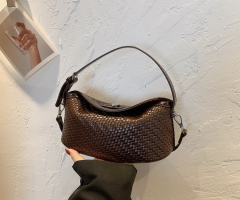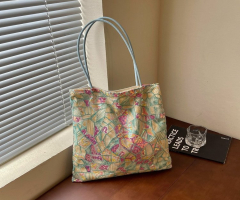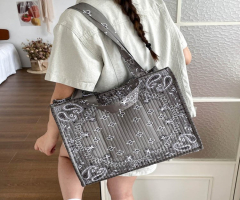
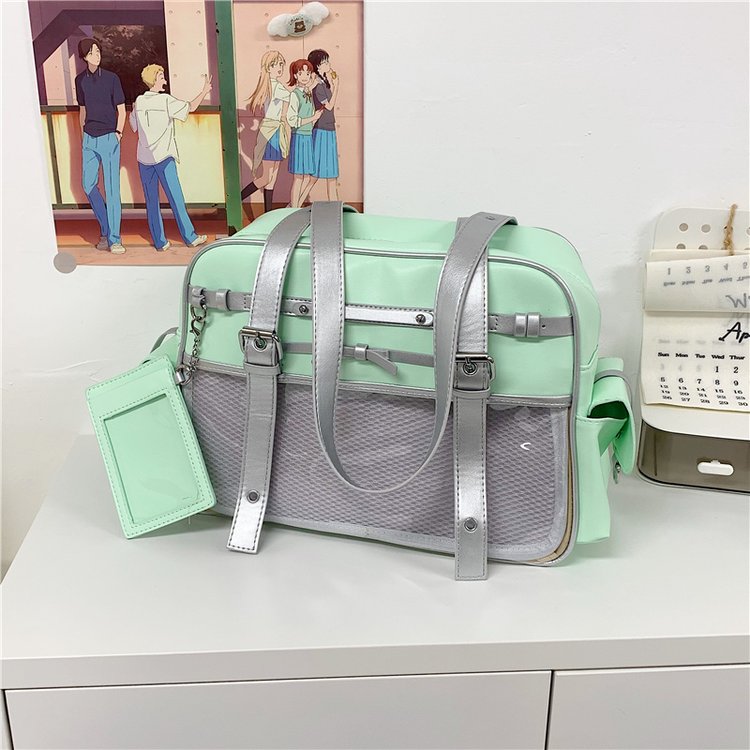
A retail brand buying wholesale hobo bags is selecting more than merchandise. It is choosing a product that customers will associate with its taste, pricing, reliability, and service. A bag can photograph beautifully and still create disappointment if its opening is awkward, its strap is uncomfortable, or its materials are described poorly. Successful buying starts by connecting the product to a clear customer promise.
This guide to choosing a wholesale hobo bag
for retail brands follows the decisions that shape a credible collection:
customer use, design differentiation, material selection, sample evaluation,
launch economics, and evidence for product claims. The goal is a bag that makes
sense within your assortment and can be replenished without losing the
characteristics customers valued. Suggested trials are evaluation procedures,
not claims of completed testing.
Give the bag a specific role in your collection
Begin by describing the customer and the
occasion in practical terms. A shopper seeking a soft everyday shoulder bag has
different priorities from someone looking for a small accessory for dinners and
events. One may value easy access and room for daily essentials; the other may
accept reduced capacity in exchange for a particular silhouette. Neither brief
is inherently better, but mixing them produces an unclear product.
Define the role alongside the rest of your
range. Is the hobo bag an accessible introduction to the brand, a seasonal
statement, or a reliable everyday option? Compare its size, price, and styling
with products you already offer. A new bag should have a reason to exist beyond
resembling a photograph that attracted attention.
Create a short product promise that can be
tested. For example, the brief might prioritize a relaxed silhouette, a secure
closure, and practical organization for a limited set of daily items. List
those items explicitly. Avoid describing the bag as suitable for everything,
because broad promises make development harder and increase the gap between
advertising and use.
Use customer evidence when available.
Review questions, return reasons, and feedback from adjacent products. If
shoppers repeatedly ask whether a shoulder strap works over a coat, that
question deserves attention during sampling. If you lack historical data, treat
your first assumptions as hypotheses and design a small evaluation to challenge
them.
Choose the right degree of customization
Wholesale can mean buying an existing
finished design, adapting a supplier's style, or developing a product with more
original components. The right route depends on differentiation, budget, and
time. An established design may be appropriate for testing a new category,
while a custom shape may be necessary when the silhouette itself is central to
the brand.
Ask which elements can change
independently. A logo, lining, strap length, pocket arrangement, or hardware
finish may each have different development requirements. A seemingly minor
request can affect tooling, material minimums, or production timing. Obtain a
written explanation before building the launch calendar around an assumed easy
modification.
Prioritize changes that customers will
notice or benefit from. Improving pocket access may contribute more than adding
another decorative metal piece. Altering the strap drop may solve a clear
comfort problem. By contrast, a custom detail that adds weight and cost without
reinforcing the product promise may make the bag harder to sell.
Clarify ownership and permitted use of
artwork, molds, patterns, and distinctive elements. If exclusivity matters,
define it in the commercial agreement and confirm what the supplier can offer
other buyers. Do not assume that paying a development fee automatically gives
the brand every right it expects. The arrangement should be reviewed for the
actual transaction.
Make the silhouette work beyond the photograph
Hobo bags rely on the relationship between
shape and softness. Evaluate the sample empty, filled with the intended
contents, carried on a shoulder, and placed on a surface. These views answer
different questions. A bag may have an appealing outline when stuffed for
photography but collapse in a way that makes access difficult during normal
use.
Review the opening first. Can a customer
reach the main compartment without removing everything else? Does the zipper
follow the curve smoothly? Does a magnetic closure align when the bag is
partially filled? The best answer depends on the design brief, but the
development team should deliberately examine the behavior rather than accepting
appearance alone.
Assess the strap with the body. The
attachment position, width, flexibility, edge finish, and drop all affect the
way the bag sits. Invite several people with different builds to try the sample
over clothing relevant to the intended season. Record their observations
separately rather than treating one person's preference as a universal finding.
Measure the product consistently. Explain
whether width is taken at the widest point and whether height includes the
handle. Photograph the measurement method for the supplier and internal team.
Clear dimensions support both quality checks and honest online listings,
especially when the design is soft enough to change shape under load.
Select materials that support the customer promise
Ask for precise descriptions of the
exterior, trim, lining, strap, and reinforcement. Material names should explain
construction rather than imply a quality level without evidence. Request a
swatch or reference for each significant component so that the approved
combination can be identified later.
Compare candidates in assembled samples
wherever possible. The shell, backing, lining, and reinforcement interact. A
material that feels attractive as a flat swatch may create excessive stiffness
at a folded seam or insufficient support at an attachment. Use those
observations to refine the design instead of declaring one broad material
category best for every bag.
For a lightweight everyday product, weigh
the finished sample and record the configuration. For a tactile fashion
product, compare surface feel, drape, and visible finishing under consistent
conditions. If color transfer, abrasion, or other performance questions matter,
ask an appropriate laboratory to recommend methods and acceptance criteria for
the intended use.
Keep care instructions connected to the
actual materials and finishes. Do not reuse a generic leather care statement on
a coated textile bag or recommend a cleaner without compatibility evidence. Ask
the material supplier for guidance and verify proposed instructions on relevant
samples before publishing them.
Run a structured sample review
Give reviewers the same intended contents
and the same questions. Ask them to load the bag, locate common items, operate
the closure, use each pocket, and carry it briefly in ordinary conditions.
Record the sample version, contents, and observations. This creates comparable
feedback and reduces the influence of whoever speaks most confidently in a
meeting.
Separate observations from interpretations.
“The lining entered the zipper path three times during this review” is an
observation. “Customers will hate the bag” is a prediction that needs more
evidence. Both may prompt discussion, but the supplier can act more effectively
on the specific condition.
Include people outside the design team
where practical. Someone who has seen every prototype may unconsciously
compensate for awkward features. A new reviewer can reveal confusing pocket
placement or difficulty finding the opening. Explain that the activity is
developmental feedback, not a statistically representative consumer study.
Turn the findings into decisions. Identify
which issues prevent approval, which require a revision, and which reflect an
acceptable tradeoff. Recheck the revised sample against the original brief.
Without that discipline, a sequence of individually reasonable changes can
produce a final bag that no longer serves the intended customer.
Establish a quality standard the factory can follow
Define acceptable construction with more
precision than luxury quality or excellent workmanship. Show the required
alignment of panels, appearance of edges, placement of branding, and behavior
of closures. Agree on dimensional tolerances and any necessary performance
criteria with the people responsible for production and inspection.
Pay particular attention to visible
signature elements. If a large curved seam is central to the design, its shape
and consistency deserve clear references. If hardware carries the logo, review
its placement, attachment, finish, and interaction with nearby surfaces. A
minor variation in a hidden area may matter less than a noticeable change to
the detail customers recognize.
Keep an approved reference sample and a
controlled specification. Identify the date and revision on both. When the
supplier proposes an alternative material or component, assess it before
production continues. Substitutions can affect care instructions and
advertising as well as appearance.
Arrange inspection early enough to allow
corrective work. Agree how the lot will be checked, what records will be
supplied, and who can authorize shipment after an issue. Sampling provides
information about the examined lot under the chosen procedure; it does not
eliminate the need for sound production controls or guarantee every unit.
Plan the color range around useful choices
A coherent launch assortment gives
customers meaningful options without stretching inventory too thin. Choose
colors based on the brand's wardrobe context and customer evidence. Consider
how they work with existing products, photography, store lighting, and the
season in which stock will actually arrive.
Review colors on the intended production
material. A digital color value or paper reference is a starting point, not a
complete description of a textured surface. View samples under consistent
lighting and compare exterior, lining, thread, and hardware together. Document
which differences are intentional.
Ask whether minimum quantities apply per
color or per material batch. A small order spread across many shades can become
expensive or impractical even when the total order meets the supplier's
advertised minimum. Simplifying the range may free budget for stronger product
development or a more useful quantity of your best supported option.
Plan how replacement stock will match.
Retain approved references and request review of later material lots where
consistency matters. A customer buying a second color may accept natural
variation; a retailer receiving visibly different versions of the same stock
code needs an explanation and a controlled decision.
Work backward from a viable retail offer
Set the intended selling position before
accepting a wholesale price. Consider what the customer receives, how the bag
compares with your own range, and what costs the channel creates. A product can
have an attractive gross margin on paper while generating weak contribution
after fulfillment, returns, promotions, and customer acquisition.
Build the calculation with clearly defined
inputs. Landed product cost should include applicable inbound costs allocated
consistently. Keep taxes and recoverability treatment aligned with your
accounting. Distinguish a full price sale from a discounted sale and do not mix
revenue including tax with costs calculated on a different basis.
For illustration, suppose net sales revenue
is USD 80 per bag and landed product cost is USD 28. Product gross profit is
USD 52 before other selling and operating costs. If fulfillment and payment
costs total USD 9 and marketing allocation is USD 13, the remaining amount is
USD 30 before returns and other expenses. These are hypothetical inputs, not
benchmarks for hobo bags.
Test the assumptions that could change the
decision. Consider slower sales, discounting, or a higher return allowance. If
the product only works when every unit sells quickly at full price, revisit the
order quantity, specification, or selling position. The purpose is to expose
fragility before stock arrives.
Publish product claims that customers can verify
Accurate product information is part of the
product experience. Use measured dimensions, relevant photographs, clearly
described materials, and a realistic explanation of what fits. Avoid turning a
subjective impression into a factual promise. Soft feel, for example, can be
described without inventing a performance guarantee.
The FTC Leather Guides address misleading
composition claims for covered leather and imitation leather goods in the
United States. [1] Review product names and descriptions against the actual
components. If the exterior and trim differ, make that understandable instead
of allowing one attractive material term to imply that the entire bag has the
same composition.
Environmental language needs similar
discipline. The FTC's Green Guides summary cautions against broad, unqualified
environmental benefit claims. [2] A specific, supported statement about an
identified component is more useful than an undefined green label. Keep the
underlying documents tied to the product and ensure the wording does not imply
a broader benefit than the evidence supports.
If a supplier mentions Leather Working
Group certification, use the organization's supplier directory to verify the
named facility and its listed status. [3] Then ask for records connecting the
relevant leather supply to your order. A directory entry alone does not
establish every claim you might want to make about a finished handbag.
Create photography that reduces uncertainty
Plan photographs around the buying
questions, not only the visual campaign. Show the front, back, base, opening,
interior organization, strap, and key hardware. Include a carried view that
provides useful scale. Make sure styling does not hide a closure or make the
bag appear to hold more than it does.
Use the final approved production version
for product photography whenever possible. If development samples are used
early, maintain a checklist of differences that must be reviewed before launch.
A changed strap, pocket, or logo can make an otherwise beautiful image
inaccurate.
Describe the contents of a capacity
photograph. If a bag is shown holding a notebook, wallet, phone, and pouch,
make clear that these illustrate fit and are not included. Avoid a broad laptop
compatibility claim based only on screen size; the device's actual dimensions
and the opening both matter.
Coordinate product copy with customer
service. Give the team the same measurement definitions, material descriptions,
and care information used on the product page. When answers are consistent,
customers are less likely to receive conflicting advice before and after
purchase.
Treat packaging as part of the delivery experience
Choose packaging that protects the shape
and finish through the intended route. Evaluate hardware contact, folds,
compression, and the amount of support required. A packed sample can reveal
problems that are invisible when the bag is displayed loose on a table.
Balance presentation with storage and
fulfillment. Elaborate packaging may improve a particular gift experience, but
it can increase shipping volume and warehouse work. Decide which elements have
a clear purpose. A dust bag, tissue, insert, or protective sleeve should solve
a defined need rather than appear automatically on every order.
Check labels and product identification
before production quantities are packed. The warehouse should be able to
distinguish variants without opening every unit. Your customer should receive
the correct color and any promised accessories. These operational details
influence satisfaction even though they rarely appear in the creative brief.
Review the unboxing process using a sample
packed exactly as proposed. Note whether the customer can restore the intended
shape easily and whether care information is readable. Record changes before
approving the packaging specification, then ensure later packing checks use
that approved version.
Connect launch results to the next buying decision
Set learning objectives before launch. You
may want to understand which color attracts repeat orders, whether customers
use the internal pocket, or why the bag is returned. Decide how those questions
will be captured so the review does not depend only on scattered anecdotes.
Separate traffic problems from product
problems. Low sales may reflect weak visibility, poor images, limited
availability, or an unclear proposition. High returns may reveal a size
expectation issue rather than a construction fault. Combine sales data with
customer comments and the circumstances of each purchase.
Review return reasons with enough detail to
act. “Not as expected” should prompt follow up where appropriate: was the issue
color, size, weight, material feel, or access? Correcting product information
may solve one problem, while changing the pattern or material may be necessary
for another.
Approve a reorder only after reviewing both
demand and consistency. Confirm the material source, components, specification
revision, and current production schedule. Preserve the features customers
liked while addressing supported problems. The aim is a dependable product, not
a sequence of similar looking bags that change unpredictably.
Keep a product evidence file
Store the approved specification, sample
review notes, material declarations, relevant reports, and final product copy
in one controlled location. Link each document to the correct style and
revision. A report is useful only when the team can establish what it tested
and why it is relevant to the bag being sold.
Assign responsibility for approving factual
claims before publication. Marketing, purchasing, and customer service should
know where to find the supporting information and who can resolve uncertainty.
When a component changes, review the associated description instead of assuming
that last season's wording remains accurate.
This file also supports better feedback. If
customers report a recurring problem, the team can compare the affected stock
with the approved construction and development observations. Evidence gathered
during design becomes useful after launch, helping the brand choose a targeted
correction rather than making broad changes based on incomplete recollections.
Review the file at agreed points in the
product's life: before launch, when approving a reorder, and after a meaningful
construction change. Remove outdated copy from shared sales materials rather
than merely adding a new version alongside it. Staff should be able to identify
the current approved description without searching through a long conversation.
Where a customer facing claim depends on a
report, retain the full report rather than a cropped pass label. The sample
identity, scope, and limitations can matter as much as the result. If the
information does not establish the proposed claim, narrow the wording or obtain
the missing evidence before publication.
Keep customer observations separate from
laboratory findings. Feedback about comfort is useful design evidence, while a
formal test addresses a defined method and set of conditions. Presenting each
for what it actually shows helps the brand communicate confidently without
overstating the strength of its information.
Questions retail brands often ask
Is an existing wholesale design enough for a brand launch
It can be, if the product fits the customer
promise and the commercial arrangement allows the intended branding and sale.
Evaluate differentiation across the whole offer, including selection,
information, service, and presentation. Avoid assuming that a logo alone
creates a distinctive product or that every launch requires new tooling.
How much testing is appropriate before a first order
Match the evaluation to materials, intended
use, claims, market requirements, and the consequences of failure. Begin with
documented sample review, then obtain specialist advice on any laboratory
testing needed. A small order reduces some inventory exposure but does not make
inaccurate claims or unsuitable construction acceptable.
Should the brand use every available color
Only when demand and operational capacity
support that range. Each additional variant requires stock, photography,
records, and replenishment decisions. A focused assortment can provide better
availability and clearer learning. Expand when the evidence shows which choices
customers value.
What makes a wholesale hobo bag suitable for repeat
selling
The bag should meet a defined customer
need, support accurate product information, and be reproducible at a workable
cost. A strong first sample is only the beginning. Reliable materials,
controlled revisions, useful customer feedback, and disciplined replenishment
turn a successful launch into a lasting part of the collection.
Sources
[1] Federal Trade Commission. Leather
Guides. https://www.ftc.gov/legal-library/browse/rules/leather-guides
[2] Federal Trade Commission. Environmental
Claims Summary of the Green Guides. https://www.ftc.gov/business-guidance/resources/environmental-claims-summary-green-guides
[3] Leather Working Group. Certified
Suppliers directory. https://directory.leatherworkinggroup.com/
Sources checked on October 20, 2026.
Regulatory references are specific to their stated jurisdictions. The
development procedures and financial illustration are recommendations and
hypothetical examples.