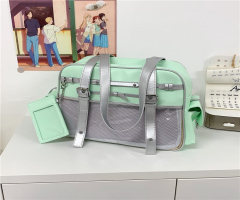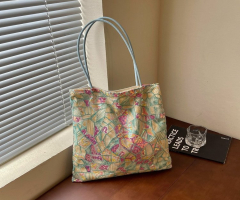

This guide follows an order from supplier discovery through sampling, production, shipping, and receipt. It is written for importers and brands evaluating Chinese suppliers rather than for shoppers buying a single bag. It provides practical questions and suggested controls without assuming a particular factory, minimum order, transit time, tariff, or certification. Those details must be established for the actual transaction.
Decide what kind of supplier relationship you need
Begin with the product and the work you
need someone to perform. If the style already exists, you may need a supplier
that can reproduce it with controlled options. If the design is new, you may
need pattern development, material sourcing, and several sample revisions.
These requirements should guide the search more than a generic claim of factory
direct pricing.
A manufacturer, trading company, and
sourcing agent can each play a legitimate role. Their responsibilities differ,
so identify the relationship explicitly. Ask who contracts with you, who
receives payment, where production occurs, and who will resolve defects. A
useful intermediary should make coordination clearer rather than obscure the
parties involved.
Consider how much coordination your own
team can manage. Dealing directly with a production site may require more
detailed specifications and follow up. A supplier offering broader coordination
may include those services in the price. Compare the actual responsibilities
and evidence of performance instead of assuming that one business model is
always cheaper or safer.
Prepare a supplier brief before requesting
quotations. Include the intended customer, dimensions, materials under
consideration, quantity by variant, branding, destination market, and delivery
needs. Explain which details are fixed and where alternatives are welcome. This
gives suppliers a fair basis for responding and makes differences between
offers easier to identify.
Verify the company and production arrangement
Request the legal company name, business
details, production address, and export arrangement. Compare the names across
the quotation, invoice, contract, and proposed payment beneficiary. Differences
are not automatically evidence of a problem, but they require a documented
explanation before money is sent.
Use independent checks proportionate to the
transaction. A catalog and a marketplace profile are starting points, not
complete verification. Where warranted, commission a company check or site
assessment that identifies the facility and relevant capabilities. Confirm what
the assessor actually reviewed; a broad visit may not answer your specific
questions about bag construction.
Ask which operations are performed at the
stated site. Cutting, sewing, printing, embroidery, hardware finishing, and
packing may involve different businesses. Understanding this arrangement helps
you evaluate schedule dependencies and trace changes. Require notice if a
production location or significant process changes after approval.
Be precise about capacity. Instead of
asking whether a factory is large, ask how your order fits into its schedule
and what must happen before production starts. Material arrival, sample
approval, and other customer commitments may affect the date. A credible answer
identifies dependencies rather than promising speed without conditions.
Issue a quotation request that exposes differences
Send the same specification to each
shortlisted supplier. Include diagrams or photographs with explanations rather
than expecting the supplier to infer measurements from an image. State whether
the quotation should include the lining, branding, packaging, spare components,
and any agreed inspection arrangements.
Request the minimum order at the levels
that affect your design. The finished bag minimum may differ from the minimum
for a special material, dye lot, logo plate, or custom carton. Ask whether
mixed colors are possible and whether the price changes with the number of
variants. The useful quantity is the order you can actually place.
Separate one time charges from recurring
unit costs. Sample fees, tooling, artwork preparation, and development charges
should not disappear into a single unexplained price. Ask what is included,
whether any charge can be credited, and what happens if the design changes.
Record the answer rather than relying on an informal understanding.
Identify the delivery basis and named
location on every quote. Also record currency, validity, payment schedule, and
exclusions. If one offer includes more freight or packaging than another,
normalize those items before comparing totals. A lower headline price may
simply represent fewer included responsibilities.
Define the hobo bag before approving a sample
Specify the silhouette, dimensions, strap
drop, opening, pocket arrangement, and closure. A hobo bag's relaxed appearance
depends on the complete construction, not only its outline. Ask the supplier to
explain the proposed shell, backing, lining, and reinforcement so you can
evaluate the resulting drape and support.
Agree on measurement conditions. A soft bag
measured flat can differ from the same bag measured while standing or filled.
Mark the relevant points on a drawing and identify whether the strap is
included in height. Use a consistent method for sample review, inspection, and
the final product listing.
Define visual details that matter to the
customer. These might include the curve of a seam, hardware finish, thread
color, edge treatment, or logo position. Provide reference images and identify
acceptable variation where appropriate. This is more useful than requesting
high quality and expecting everyone to share the same interpretation.
Clarify the status of the first sample. It
may use available materials to demonstrate the pattern rather than the final
approved components. Ask the supplier to list every substitution. An early
development sample can answer useful questions, but it should not silently
become the production reference when its materials are different.
Review samples in stages
Use the first review to resolve shape,
access, and carrying behavior. Load the bag with representative contents and
examine the opening, balance, strap, and pockets. Keep observations specific
enough to guide a revision. Photographs and short annotated videos can reduce
ambiguity, especially when teams communicate across languages and time zones.
Use a later sample to confirm the actual
materials, hardware, branding, and finishing. Check the whole combination
rather than approving each element in isolation. A lining change can affect
softness; a heavier logo plate can alter how a panel hangs. Reassess the
feature that changed and any connected part of the design.
Retain a final approved reference and
record its revision. Identify the matching bill of materials and specification.
Ask the supplier to keep an equivalent reference for production, and establish
which document takes precedence if a photograph and a written measurement
disagree.
Do not release unclear decisions into
production simply to protect a tentative date. If a material, construction
detail, or required test remains unresolved, identify the consequence and
obtain the missing evidence. Fixing the decision during sampling is usually
more manageable than negotiating the meaning of approval after the bags are
packed.
Connect material claims to documents
Request composition information for each
significant component. Terms such as leather, coated fabric, recycled lining,
or animal free construction should have a defined meaning within the product
specification. Ask what evidence supports the proposed wording and whether it
covers the actual material source.
For United States sales, the FTC Leather
Guides discuss misleading material representations and disclosure for leather
appearance products that are not leather. [1] Review the finished product
description accordingly. The supplier's preferred marketing term does not
remove the need to describe the bag accurately to your own customers.
For a claimed certified leather supply,
identify the named facility and compare it with the Leather Working Group
supplier directory where relevant. [2] Obtain records that connect your order
to the claimed material. A certificate or directory listing should be checked
for scope rather than treated as evidence for every component or finished
product claim.
Ask a suitable laboratory which tests are
needed for the product, destination, intended users, and claims. SGS, for
example, describes testing and inspection services for bags and accessories.
[3] That service description is a starting point for defining a relevant scope,
not proof that an untested supplier or bag meets a requirement.
Control the schedule through milestones
Build the order calendar from decisions and
dependencies. Include specification completion, sample approval, material
ordering, production, inspection, correction time, packing, dispatch,
transport, and warehouse receipt. Do not compress these into a single
production lead time when planning a launch.
Ask the supplier when the clock starts. A
quoted number of days may assume a deposit, confirmed artwork, and available
materials. Record those conditions and the dates on which they are satisfied.
Otherwise, the buyer and supplier can both believe the order is on schedule
while counting from different starting points.
Request progress evidence appropriate to
each stage. Material receipt records, production photographs tied to the order,
and inspection reports answer different questions. Avoid treating a generic
image of a busy workshop as confirmation that your goods are nearly complete.
Include a path for delays. Agree when the
supplier must notify you, what information the update should contain, and which
alternatives require approval. Splitting a shipment or substituting a component
can affect cost and product consistency. Evaluate the actual tradeoff before
accepting a solution proposed under time pressure.
Make payment and change control explicit
Set payment milestones in the agreement and
connect them to defined deliverables. Specify the currency, beneficiary,
invoice references, and any conditions for releasing the balance. The
appropriate arrangement depends on the transaction; no payment structure by
itself guarantees successful performance.
Verify unexpected changes to payment
instructions using a previously established contact method. Do not rely only on
the message announcing the new account. Keep the verification record with the
order file. This practical control is especially useful when several people
handle purchasing and accounts payable.
Require written approval for changes to
materials, production sites, components, quantities, or packaging. State how
price and schedule changes will be documented. Without a controlled process, a
supplier may interpret a casual response as approval while the buyer believes
the issue is still being discussed.
Clarify ownership and handling of custom
molds, patterns, and artwork where these are part of the project. Discuss
storage, reuse, and access if the relationship ends. These details should be
part of the reviewed commercial arrangement rather than inferred from a sample
payment.
Arrange inspection before shipment pressure builds
Agree on the inspection scope while the
order is being planned. Include product identity, quantity, workmanship,
measurements, function, branding, packaging, and any specified tests. Identify
the approved reference and the people authorized to decide what happens if a
problem is found.
If an inspection uses sampling, have the
provider define the lot, selection method, sample size, defect categories, and
acceptance criteria. A numerical acceptance level is not a promise about the
defect percentage in the shipment. Make sure the buyer understands what the
result can and cannot establish.
Schedule the check when the required
quantity is complete and available under the agreed procedure. Allow time for
sorting, repair, or reinspection if necessary. If goods are loaded before a
meaningful decision can be made, the buyer has reduced the practical value of
the inspection.
Ask for evidence of corrective work rather
than a statement that everything is fixed. Depending on the issue, this may
require reinspection or additional testing. Preserve the original findings,
corrective plan, and final disposition together so that the next order can
address the cause rather than repeat the same discussion.
Calculate the shipment cost with the right boundaries
Create a cost sheet that separates goods,
development, packaging, inland transport, international freight, insurance
where applicable, inspection, customs related charges, and final delivery.
Determine which items the supplier's quote already includes so they are neither
omitted nor counted twice.
The International Trade Administration
explains that Incoterms allocate delivery related responsibilities and risks.
[4] Use the selected rule with its named place and version. Then address price,
payment, quality remedies, and other commercial terms separately in the
agreement rather than expecting the shipping term to settle them.
Ask a customs broker or other qualified
adviser to review classification, valuation, origin, and current destination
requirements using the actual product information. Do not assign a tariff
solely from the phrase hobo bag. Keep quoted duty and tax assumptions dated,
because the relevant treatment must be checked for the specific shipment.
CBP provides importing resources and
encourages new importers to review the relevant requirements and obtain
commodity specific information. [5] For United States shipments, use that
guidance as part of preparation. For other destinations, use the corresponding
authorities and local expertise; a United States example is not a substitute
for the destination's rules.
Review packing and transport together
Request carton dimensions, gross and net
weights, packing quantities, and the proposed protection for the bag. A soft
product may be vulnerable to undesirable creasing or contact marks even when
the outer carton is intact. Review a packed sample and discuss the expected
transport and storage conditions.
Ask the logistics provider to compare
options using the actual packed dimensions. An assumption based only on the
bag's weight may overlook how its packaging affects the quotation. If a
supplier proposes tighter packing, examine the effect on shape and finish
before approving the savings.
Check how labels correspond to stock codes
and carton contents. Agree on mixed carton layouts where applicable. A
receiving team should be able to identify variants without guessing from color
names that differ between the invoice, carton, and product label.
Confirm the documents needed before
dispatch. The commercial invoice, packing information, transport documentation,
and any additional required records should agree on the relevant shipment
details. Send draft information to the responsible broker or logistics partner
early enough to resolve discrepancies before goods are moving.
Receive the order with a documented process
Prepare the warehouse with expected
quantities, stock codes, carton details, and the approved product reference.
Identify who records damage and discrepancies and how questionable goods are
separated. A clear receiving procedure protects the evidence needed to
understand whether an issue arose in production, packing, or transport.
Record carton condition before discarding
packaging when damage is present. Photograph labels and affected products, and
retain the relevant identifiers. Follow the reporting requirements and time
limits in your agreements and transport arrangements. A general complaint
without traceable details is harder for any party to investigate.
Compare the shipment with the purchase
order and inspection record. A pre shipment report does not replace receipt
checks for missing cartons, transit damage, or wrong deliveries. Keep the
different controls connected while recognizing that they examine different
stages.
Close issues with a documented outcome.
Record replacements, repairs, refunds, credits, or other agreed remedies and
the quantities involved. Use actual results to update the cost sheet and
supplier assessment. The purpose is to improve the next decision, not merely to
label the supplier good or bad.
Make the first inquiry easy to answer
A useful inquiry provides enough
information for the supplier to identify uncertainty. Describe the intended
bag, attach a reference with permission to use it, and state the planned
quantity by color. Explain whether the reference is a visual direction or a
design that must be reproduced exactly. Ask the supplier to identify any
element that cannot be supplied as described.
For example, a buyer might request a quote
for a soft shoulder bag with a zipped main compartment, one internal pocket,
and a plain exterior. The inquiry should add the proposed dimensions, material
requirements, branding method, packaging, destination, and preferred delivery
basis. These are example brief elements, not a recommendation to copy a
particular design or an assurance that any quantity will be accepted.
Ask the supplier to return assumptions
alongside the price. Which material was costed? Is the hardware standard stock?
Is the sample made with production materials? What approvals must be complete
before the proposed schedule begins? Written answers make the quote useful even
when the supplier cannot yet provide a final price.
Decide when the evidence is sufficient to proceed
Set a decision gate before the production
commitment. The buying team should be able to identify the contracting entity,
approved product version, material specification, cost boundaries, payment
milestones, and inspection arrangement. Open questions should have an owner and
a consequence, rather than remaining scattered across messages.
Some uncertainties can be managed through a
smaller initial order or a controlled pilot. Others require resolution first,
particularly when they prevent the buyer from knowing what product will be
supplied or how it may be described. Match the response to the uncertainty
instead of treating every concern as a reason to abandon the supplier.
If the supplier cannot explain a material
substitution or provide the agreed production reference, document the gap and
pause that decision. If the remaining uncertainty is customer demand, adjust
inventory exposure and collect sales evidence. Distinguishing these situations
helps the buyer spend effort on the information that can actually change the
outcome.
Use a decision log to preserve these
judgments. Record the question, the evidence received, the person approving the
decision, and the affected specification revision. If the buyer accepts a
tradeoff, describe it clearly enough that another team member can understand it
later. This is particularly helpful when a sample is approved by one person and
the purchase order is issued by another.
Before payment, compare that log with the
final order documents. An approved change that never reached the purchase
specification can create an avoidable disagreement. Resolve the mismatch while
both parties can still adjust the paperwork and production instructions.
Turn the first order into a repeatable supply process
Review the order against the commitments
that mattered: sample accuracy, response quality, production timing, inspection
results, document accuracy, and received condition. Separate problems caused by
an unclear buyer brief from problems caused by supplier execution. This makes
corrective discussions more useful and fair.
Confirm the repeat order specification
explicitly. Ask whether materials, hardware, subcontractors, and production
locations remain unchanged. Request approval of replacements where required.
The same style number does not guarantee that the supply chain behind it is
identical.
Keep a complete order file with the final
specification, sample photographs, quotation, agreement, inspection results,
shipping records, and issue resolution. Give internal teams access to the
version they need. Reliable records reduce the dependence on one salesperson's
memory and make future buying less vulnerable to staff changes.
A successful wholesale purchase from China
is a sequence of verified decisions. Define the bag clearly, establish the
supplier's responsibilities, confirm the sample, control changes, and check the
shipment at the right points. Those practices provide a stronger basis for
repeat business than relying on a low price or a broad promise of quality.
Sources
[1] Federal Trade Commission. Leather
Guides. https://www.ftc.gov/legal-library/browse/rules/leather-guides
[2] Leather Working Group. Certified
Suppliers directory. https://directory.leatherworkinggroup.com/
[3] SGS. Bags and Accessories. https://www.sgs.com/en/service-groups/bags-and-accessories
[4] International Trade Administration.
Know Your Incoterms. https://www.trade.gov/know-your-incoterms
[5] United States Customs and Border
Protection. Tips for New Importers and Exporters. https://www.help.cbp.gov/s/article/Article-1894?language=en_US
Sources checked on October 20, 2026. Import
and product requirements depend on the actual goods and destination. No
supplier, tariff, minimum order, production schedule, or certification is
represented here as verified for a particular transaction.
More from this category