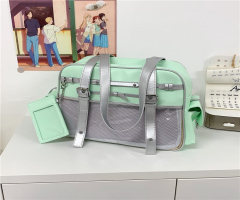

Choosing a hobo bag manufacturer for wholesale buyers means evaluating the ability to reproduce an agreed product across an order. A well made sample is necessary, but the wholesale decision also depends on material control, production discipline, packing accuracy, and the manufacturer's response when something goes wrong. These capabilities determine whether the buyer receives usable inventory or a collection of expensive exceptions.
The strongest evaluation follows the bag
through production. It asks how the pattern becomes a sample, how approved
components are identified, how workers receive instructions, how defects are
detected, and how the shipment is released. This guide provides a practical
framework for that evaluation. It describes questions and evidence to seek,
rather than claiming that any particular factory has been audited or tested.
Begin with the wholesale operating model
Define what your business needs from the
manufacturing relationship. A wholesaler supplying small boutiques may need
mixed cartons and frequent replenishment. A buyer serving larger accounts may
need consistent runs of a limited assortment, specific labeling, and scheduled
deliveries. These requirements influence supplier suitability as much as the
appearance of the bag.
Identify which commitments are firm.
Distinguish confirmed customer orders from estimates, and separate core
products from experimental designs. Explain the expected order pattern
honestly. A manufacturer can plan more usefully around a realistic range than
around an optimistic annual volume unsupported by purchase commitments.
Record service requirements alongside
product requirements. These might include variant identification, carton maps,
documentation, spare components, or handling of approved returns. If those
activities are necessary to serve your customers, include them in the quotation
and supplier evaluation rather than treating them as favors after production.
Decide what your own team will control. You
may provide a complete technical specification, or you may need development
support from the manufacturer. Make the division explicit. Gaps between buyer
and supplier responsibilities can remain invisible until a missing decision
delays the order or produces an unsuitable component.
Evaluate manufacturing capability with a relevant product
Ask for examples that resemble the
construction you intend to buy. Experience making a rigid structured bag does
not automatically establish the ability to produce a soft hobo silhouette.
Compare materials, seam shapes, strap attachments, closures, and finishing
rather than relying only on the category label handbags.
Review how the manufacturer explains the
sample. A useful discussion connects visible features to production decisions:
why a reinforcement is used, how the opening is shaped, and where a material
may be difficult to sew. Ask for explanations in terms you can verify, not a
list of impressive machinery names.
Where a factory visit or independent
assessment is appropriate, focus the scope on your product. Ask the assessor to
examine the relevant processes, records, and production arrangement. A general
business check and a technical capability review answer different questions;
specify which uncertainty you need resolved.
Clarify which work is subcontracted. The
factory may coordinate printing, embroidery, plating, or specialist finishing
elsewhere. This arrangement is not inherently unsuitable, but it affects
control and timing. Ask how specifications are passed to those providers and
how incoming work is checked before it enters your order.
Look for control of the pattern and specification
Ask how the approved pattern is identified
and updated. A hobo bag's curve, opening, and strap position depend on the
shape and assembly of its parts. If a revised pattern is not clearly separated
from an earlier version, production may combine instructions that were never
intended to work together.
Provide measurement points that the factory
can repeat. Define the bag's condition during measurement and the relevant
dimensions of the body, opening, strap, and pockets. Agree on tolerances
suitable for the design. The goal is a shared inspection method rather than a
set of numbers interpreted differently by each team.
Connect the pattern to a bill of materials.
Identify the shell, lining, reinforcement, thread, zipper, hardware, labels,
and packing components. Include the references needed to distinguish approved
items from visually similar substitutes. A sample alone may not reveal these
internal or less visible decisions.
Ask who authorizes a change and how it
reaches production. The answer should include the buyer's approval where the
change affects an agreed requirement. Keep the revision history accessible. A
supplier that can explain this process gives the buyer a better basis for
evaluating repeatability than one that relies entirely on verbal instructions.
Understand the load path through the bag
Examine how the bag's contents are
supported by the body, strap attachments, and strap. Look for the connection
between seams, folded layers, reinforcement, and hardware. The outside
appearance may not show how those parts are secured, so request a construction
explanation or a suitable development sample for internal examination.
Ask how the manufacturer checks attachment
consistency during assembly. A final visual check may identify an open seam,
but some internal mistakes become difficult to see after the lining is closed.
Discuss where an earlier process check would provide better information.
Assess the proposed structure against
intended use. A large everyday bag and a compact occasion bag may need
different evaluation priorities. Do not assign an unsupported load capacity
from appearance or a brief handling exercise. If a performance claim is
planned, establish an appropriate test method and evidence with a qualified
provider.
Record the accepted construction using
diagrams or photographs where useful. If a later cost reduction removes
reinforcement or changes the strap connection, the buyer should be able to
recognize that it is a product change. Keeping the load path understandable
helps prevent a price discussion from quietly altering function.
Check cutting and material preparation
Ask how material lots are identified before
cutting and how pieces from different lots are handled. Where color or texture
variation is relevant, define how matching is evaluated. The appropriate
approach depends on the material and product, but the decision should be
deliberate rather than left to chance.
Review the treatment of visible surfaces
and high attention areas. A large front panel, curved seam, or prominent strap
may require different appearance controls from a concealed reinforcement.
Explain which areas matter most to your customers and ask the manufacturer how
that priority is communicated.
Discuss material preparation that affects
the finished result. Backing, folding, edge treatment, or other preparation can
change softness, bulk, and appearance. Ask which steps are included in the
approved construction and how consistency is maintained. Avoid treating a
material name as a complete description of the finished part.
Request evidence tied to the order when
problems arise. If several units show a repeated surface issue, lot
identification and cutting records may help locate the source. Without those
connections, the supplier may repair visible defects while leaving the same
material problem in the remaining production.
Evaluate seams and finishing as a process
Inspect seam alignment, puckering, skipped
stitches, loose ends, and the way different layers meet. Describe the specific
condition rather than labeling the entire bag poor quality. A clear observation
allows the manufacturer to investigate the affected operation and propose a
targeted correction.
Ask how workers receive the required stitch
appearance and assembly sequence. The answer may involve reference samples,
work instructions, or supervised setup. What matters is that the approved
requirement can reach the people performing the work and that deviations are
noticed before a large quantity is complete.
Review edges in the areas customers touch.
Strap edges, opening edges, and folded transitions should be evaluated in the
context of the selected material and finish. A visually neat edge can still
feel uncomfortable or behave poorly when bent. Record the relevant handling
observations without presenting them as formal test results.
Separate product design from production
variation. If every sample has the same awkward opening, the pattern may need
revision. If only some units show an uneven seam, the production method or
control may need attention. Asking the manufacturer to distinguish these causes
helps avoid repeatedly sorting symptoms.
Test closures and pockets in the assembled product
Operate the main closure with the bag both
empty and filled with representative contents. Check whether the lining
catches, whether the pull is accessible, and whether the opening remains
useful. A component that functions on its own may behave differently after it
is sewn into a curved body.
Review pocket dimensions and placement
using the intended items. An internal pocket can appear generous when flat but
become difficult to reach once the bag is loaded. Ask whether the supplier has
checked that interaction rather than evaluating each part independently.
For relevant laboratory evaluation, STC
lists handbag and zipper testing categories including seam strength, zipper
pull attachment, and colorfastness. [1] Use that information to discuss a
product specific scope with a testing provider. A list of available tests does
not establish that every method is necessary or that a particular bag has
passed.
Keep component and finished product
evidence distinct. A zipper supplier's report may describe a component under
stated conditions. It does not automatically establish the performance of the
assembled bag, its stitching, or the way the closure is installed. Ask what
question each report actually answers.
Review material identity and color transfer
Obtain a component level declaration and
make sure it matches the quotation and approved sample. If the exterior and
trim use different materials, retain that distinction in your records. It can
affect care information, customer descriptions, and the interpretation of a
complaint.
For United States sales, the FTC Leather
Guides address misleading descriptions of covered leather and imitation leather
goods. [2] Use precise wording in your wholesale information instead of
repeating an ambiguous supplier label. Give retail customers enough information
to describe the product accurately.
SATRA identifies straps, edge finishes, and
other handbag components as potential contributors to color transfer and
describes several relevant evaluation approaches. [3] Discuss the actual
contact surfaces and materials with a laboratory. An acceptable result for one
component or color should not be extended to unrelated variants without a
technical basis.
Ask how the factory controls material
substitutions after approval. Changes in coating, backing, finish, or source
may matter even when the appearance is similar. Establish which changes require
review and whether new evidence is needed. This is particularly important for
repeat wholesale orders that are marketed under the same stock code.
Assess production checks before final inspection
Ask where the manufacturer checks work
during production and what records are kept. Useful checkpoints occur where an
error can still be corrected efficiently, including before concealed
construction is closed. The exact sequence should follow the product's risks
and the factory's process rather than a generic checklist copied from another
item.
Review how failures are isolated. If an
operation produces a recurring defect, can the factory identify affected units
and prevent them from moving forward? Ask what happens to work already
completed since the last acceptable check. This reveals more about control than
a simple statement that quality staff are present.
Ask for a corrective action example
relevant to similar work, with confidential customer information removed if
necessary. Look for a defined problem, an investigation, a change, and
verification that the change worked. A set of photographs showing repaired
goods demonstrates repair, but does not by itself explain prevention.
Keep final inspection as a separate
decision point. Agree on its scope, sampling procedure where used, and
acceptance rules before the shipment is urgent. The result should inform a
clear disposition: release, correction, further evaluation, or another agreed
action. Avoid ambiguous approval messages that leave responsibility unclear.
Compare suppliers using evidence and importance
Create a short evaluation covering product
capability, material control, quality process, delivery planning,
communication, and commercial fit. Define what each rating means. A numerical
score without an evidence standard can give an appearance of precision while
simply reflecting the buyer's impression.
Weight the criteria according to your
wholesale model. If repeat replenishment is essential, material continuity and
schedule reliability may deserve more weight than a broad catalog. If your
accounts require detailed packing, evaluate that capability directly. The best
supplier for another buyer may not fit your operating needs.
Separate missing information from a
confirmed weakness. A supplier that has not yet supplied a relevant report is
different from one whose report shows a failure. Record the gap and what would
resolve it. This keeps the comparison fair and directs follow up toward useful
evidence.
Use a trial order to test execution where
appropriate. Define what the trial will evaluate before placing it: revision
control, packing accuracy, communication, or product consistency. Do not
interpret one successful delivery as a guarantee of future performance. Use the
results to decide what controls remain necessary.
Negotiate price without obscuring the specification
Ask the manufacturer to explain proposed
cost reductions by component or process. A standard hardware finish, simpler
packaging, or fewer variants may reduce complexity. A thinner reinforcement or
different exterior material changes the product. These options should not be
presented as interchangeable ways to achieve the same bag.
Compare quotations against the same
approved requirements. Record included packaging, development charges,
inspection arrangements, and delivery basis. If an alternative is offered, give
it a separate specification reference so the team does not accidentally compare
different products as though only price changed.
Use current logistics and import
information for landed cost planning. Consult the responsible provider for the
actual shipment rather than relying on a generic shipping estimate. Preserve
the assumptions and date of the calculation. This allows the buyer to
distinguish a manufacturing price change from a change elsewhere in the supply
process.
Agree on handling nonconforming goods
before production begins. Define evidence, reporting, correction, and the
available remedies in a reviewed commercial agreement. A replacement that
arrives after your retail customers' selling season may not solve the problem.
Discuss practical outcomes rather than relying on a vague promise of
satisfaction.
Verify packing and identification
Approve a packed sample when presentation
or shape protection matters. Examine how the bag is supported, where hardware
contacts surfaces, and how units are arranged in the carton. Request the same
packing method for inspection so that the evaluation matches what will actually
travel.
Check the relationship between stock codes,
labels, and carton contents. Mixed wholesale cartons need a clear packing map.
If color names differ across documents, agree on a controlled reference.
Warehouse staff should not have to interpret similar shades or supplier
nicknames to receive the correct inventory.
Include accessories and inserts in the
packing specification. A missing strap or incorrect care card can make an
otherwise sound bag unsuitable for immediate sale. Identify who checks these
items and how shortages are recorded. Counting finished bags alone does not
establish a complete order.
Review any proposed reduction in packing
volume against the product. More compact cartons can change creasing,
compression, or contact between components. Evaluate the packed result before
accepting the saving. The commercial benefit should be based on usable
delivered goods rather than a freight calculation in isolation.
Use a product specific evidence request
Send a short request that links each major
question to the evidence you need. For material identity, request the approved
component references and relevant declaration. For pattern control, ask how the
current revision is identified. For packing accuracy, request the proposed
carton map and a packed sample. This makes the supplier's response easier to
assess than a broad request for all certificates.
Prioritize the gaps that could change the
buying decision. If the sample's opening does not meet the brief, a lengthy
discussion of warehouse capacity is premature. If the construction is suitable
but repeat material availability is unclear, focus on that dependency. An
orderly review saves effort for both parties.
Ask for clarification when a document
appears relevant but its scope is uncertain. A report may cover a material
rather than the assembled bag, or a facility assessment may relate to a
different address. Record what has been established and what remains unknown.
Do not convert an impressive document into a broader conclusion than it
supports.
Keep the request proportionate to the order
while preserving essential controls. A small trial and a major repeat program
may justify different levels of assessment. The purpose is not to collect the
largest file; it is to obtain enough reliable information to make the actual
decision and manage the remaining uncertainty.
Keep commercial and technical evidence
together when evaluating alternatives. A supplier may offer a lower price
because it has interpreted the construction differently, rather than because it
can make the approved design more efficiently. Resolve that difference before
scoring the offer. The comparison should show what each manufacturer will
supply, what has been verified, and which questions remain open for the buyer
to decide.
Conduct a useful supplier review meeting
Organize the meeting around the approved
sample, the specification, and a short list of unresolved points. Ask the
manufacturer to demonstrate or explain the relevant operation where practical.
Assign each question an owner and a date so that discussion results in
decisions rather than a new collection of general promises.
Include the people who will handle the
order. A capable sample maker and an informed production manager may reveal
different issues from the sales contact. Ensure that agreed changes reach
everyone responsible for materials, assembly, inspection, and packing. The
buyer's own team should apply the same discipline.
Close the meeting with a written record of
approvals, exceptions, and actions. Distinguish a proposal from a decision and
identify any cost or timing consequence. Ask both sides to resolve
discrepancies promptly. This record becomes especially useful when the first
bulk shipment is compared with what was discussed during development.
Build continuity after the first delivery
Keep a retained sample and a complete order
record for each meaningful revision. When a retailer reports a concern,
identify the affected variant and batch before comparing it with later stock.
This avoids attributing a problem from an older construction to a corrected
version or overlooking a new issue.
Review the manufacturer using actual
outcomes. Track whether promised milestones were met, how accurately the goods
were packed, and how issues were resolved. Include your own approval delays
where they affected the result. A balanced record supports a more useful
supplier discussion than an overall good or bad label.
Before reordering, confirm the
specification, component availability, production location, and current
schedule. Ask whether the price assumes any changes. The convenience of
repeating a purchase order should not replace verification of what will be produced.
A suitable hobo bag manufacturer makes the
product and its production controls understandable. The wholesale buyer should
be able to connect the approved design to the materials, the assembly process,
the inspection result, and the delivered stock. That traceable relationship is
the practical foundation for reliable repeat business.
Sources
[1] STC. Handbag and Zipper Testing. https://www.stc.group/getfile/index/action/images/name/566a76c1cf929.pdf
[2] Federal Trade Commission. Leather
Guides. https://www.ftc.gov/legal-library/browse/rules/leather-guides
[3] SATRA. Colour transfer from handbags. https://www.satra.com/spotlight/article.php?id=129
Sources checked on October 20, 2026.
Evaluation procedures are recommendations. No factory audit, product test, or
supplier performance result is claimed for a specific manufacturer.