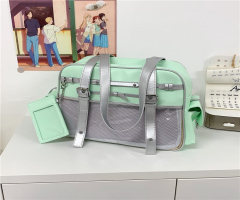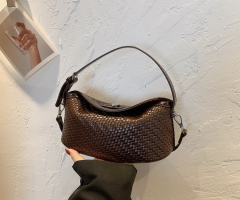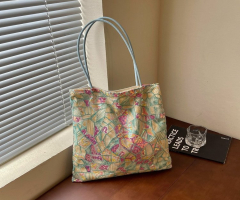
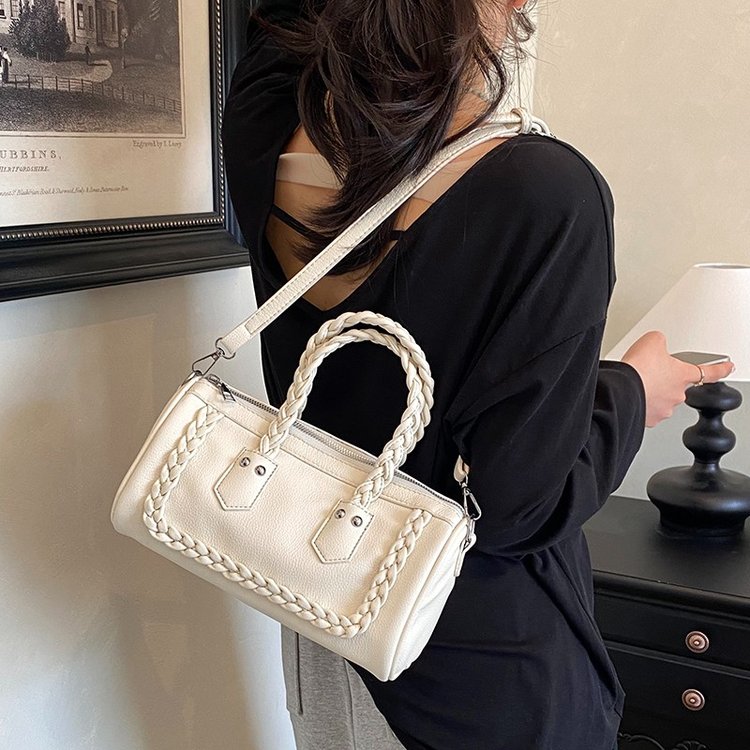
A low minimum order quantity can make a hobo bag collection easier to launch, but the smallest order is not automatically the best buying decision. A supplier may accept fewer finished bags while still requiring a material commitment, a setup fee, or a limited choice of colors. The buyer needs to understand the complete commitment before comparing the headline minimum.
When searching for a wholesale hobo bag
with low MOQ, focus on what the first order must accomplish. It might validate
a silhouette, test a new sales channel, or serve a small group of existing
customers. Each purpose calls for a different balance of customization,
inventory, and speed. This guide explains how to structure a small order that
produces useful evidence without creating obligations you did not intend.
Define what you are trying to learn
Start with a specific commercial question.
Perhaps customers already buy your accessories but have not purchased bags from
the brand. Perhaps retailers have asked for a softer shoulder style, or an
online shop wants to test a new price position. Write down the uncertainty
before selecting colors or discussing a minimum quantity.
A small order cannot answer every question
at once. If you change shape, material, price, branding, and sales channel
together, a disappointing result will be difficult to interpret. Choose the
main hypothesis and keep other variables reasonably consistent. The first batch
should help you decide whether to repeat, revise, or stop.
Define the evidence you will collect.
Useful observations might include product page questions, reasons for returns,
demand by color, or whether wholesale accounts reorder. Decide when the review
will occur and what information will be available. A calendar date alone is not
enough if the stock has not had a meaningful opportunity to sell.
Set an exposure limit before asking
suppliers to negotiate. Include development, goods, packaging, transport, and
other relevant costs. Separately consider any unused materials you agree to
purchase. This limit gives you a disciplined basis for evaluating an attractive
discount that requires a much larger commitment.
Separate the different minimum quantities
Ask the supplier to identify the minimum
for the finished style, each color, each material, custom hardware, and
packaging. These constraints may come from different sources. A sewing facility
can be willing to make a short run while its material supplier requires a
larger batch.
Clarify whether mixed variants count toward
the total. An offer for 100 bags might allow any combination of stocked colors,
or it might require 100 in each color. Those arrangements create very different
inventory exposure. Request a written breakdown that connects quantities to the
exact options you intend to buy.
Ask whether the advertised minimum applies
to stock goods or new production. Stock goods may offer immediate availability
but limited customization and uncertain replenishment. New production may
support a more consistent specification while requiring additional approvals
and lead time. Neither route should be assumed from a product listing.
Identify commitments that sit outside the
finished goods quantity. The supplier might ask you to fund a complete roll of
material or a batch of logo plates. Establish who owns the remainder, where it
will be stored, how it is identified, and whether future orders can actually
use it.
Choose a realistic route for a small order
One route is to buy an existing bag with no
product changes. This can help evaluate demand for a category or selling
position. Its limitation is that the result may say little about the appeal of
a future custom design. Treat the purchase as a test of the actual product you
are offering.
A second route is to customize an
established construction using available components. Options might include a
label, selected lining, or a standard hardware finish. Ask which changes
preserve the supplier's existing production setup. This route can provide
useful differentiation while avoiding the commitments associated with new
patterns or tooling.
A third route is a paid pilot of a new
design. A pilot may have a higher unit cost because development work is spread
over fewer units. It can still be sensible if the purpose is to validate
construction before a larger order. Keep pilot findings separate from
assumptions about later production cost and capacity.
Evaluate these routes against your learning
objective. If the central uncertainty is whether the strap and opening work, a
suitable development sample may answer more than a large stock purchase. If the
uncertainty is demand at a particular price, a sellable batch with consistent
presentation may be more informative.
Reduce complexity without weakening the product
Limit changes that create separate sourcing
or setup requirements. A standard zipper, an available lining, or a shared
hardware finish may make a small order easier to manufacture. Ask the supplier
to explain the cost and quantity effect of each option rather than removing
features indiscriminately.
Keep the features that deliver the product
promise. If secure closure is essential to the intended customer, removing the
zipper to reach a lower minimum may defeat the purpose of the test. Savings are
useful when they simplify production while preserving what you are trying to
validate.
Concentrate the first range where you have
evidence. Two well chosen colors can be easier to evaluate than a broad
assortment with only a few units of each. However, avoid claiming that a tiny
allocation establishes reliable preferences. Treat early results as directional
and consider availability when comparing variants.
Check that simplification does not create
misleading copy. A substituted exterior, trim, or lining may change the correct
material description and care instructions. Request updated component
information whenever the specification changes. A small order still needs to be
represented accurately to the customer.
Evaluate the sample before discussing expansion
Review the assembled bag in the conditions
relevant to its intended use. Load the agreed everyday items, operate the
closure, reach each pocket, and assess the strap position. Photograph the
sample both filled and unfilled. The aim is to identify design questions before
they become inventory.
Document observations instead of relying on
a general approval. Note whether the lining enters the zipper path, whether the
opening becomes restricted when loaded, and whether the strap edges feel
uncomfortable to reviewers. These are proposed evaluation activities, not
evidence that the bag has passed a formal durability test.
Ask whether the sample contains the
materials intended for the order. Development samples sometimes use available
components while demonstrating a pattern. Require a list of substitutions and
obtain approval of the final combination. Otherwise, you may be judging one
product and purchasing another.
Retain the approved reference with a dated
specification. A low MOQ does not reduce the value of clear measurements,
materials, and workmanship criteria. Those records help establish whether an
issue comes from the design, a production deviation, or a difference between
the sample and the delivered batch.
Compare complete commitments instead of unit prices
Build a comparison using the same boundary
for each offer. Include development charges, goods, packaging, inspection,
applicable testing, freight, and other relevant inbound expenses. Separate
recoverable taxes according to your accounting treatment. Keep uncertain costs
visible instead of assuming that a supplier's headline price includes
everything.
Consider two hypothetical offers. Supplier
A offers 100 bags at USD 18 each, with USD 200 in setup charges and USD 500 in
other inbound costs. The total is USD 2,500, or USD 25 per ordered bag.
Supplier B offers 300 bags at USD 14 each, with USD 300 in setup charges and
USD 900 in other inbound costs. The total is USD 5,400, or USD 18 per ordered
bag.
Supplier B has the lower allocated unit
cost, but requires USD 2,900 more initially and adds 200 bags to inventory.
That difference may be justified by established demand; it may be unsuitable
for an uncertain launch. These figures illustrate a comparison method and are
not supplier quotations, market prices, or forecasts.
Also distinguish inventory from expense.
Unsold bags still have potential value, but their cash is unavailable for other
uses and they may require storage or discounting. Evaluate the larger order
under a slower sales case. The right comparison is the commercial consequence
of each commitment, not the unit price alone.
Make unused material obligations visible
If the supplier requires a larger material
purchase than the first order consumes, ask for an estimate of usage and
remaining quantity. Clarify the unit of measurement and how production waste is
treated. Do not assume that every meter purchased becomes an equivalent amount
of usable inventory.
Agree on identification and storage.
Material reserved for your project should be linked to an order or lot
reference, with a record of what remains after production. Establish whether it
may be used for other customers and what approval is needed. These terms matter
when the material is funded by the buyer.
Ask how long the supplier is willing to
store the remainder and what happens if you do not reorder. Transfer, disposal,
storage charges, or loss of usability may affect the decision. Obtain a
practical agreement rather than accepting an undefined promise that the
material will be available whenever needed.
Before a later order, verify the remaining
material and its suitability. A previous payment does not establish current
condition or sufficient quantity. If the new batch uses a different source or
lot, review the effect on appearance and performance instead of treating the
repeat order as automatically identical.
Protect quality in a short production run
Small quantities still need clear
acceptance criteria. Identify the features that must be consistent and the
defects that would prevent sale. Use photographs and measurements where they
improve understanding. A supplier cannot reliably act on a request to make
every bag perfect without knowing the actual requirements.
Decide which checks should cover every unit
and which need specialist evaluation. For a small batch, checking
identification, accessories, and obvious workmanship on all units may be
operationally feasible. That does not replace laboratory work for properties
that cannot be established visually or through ordinary handling.
Color transfer deserves attention where the
bag contacts clothing. SATRA describes handbag colorfastness evaluation
involving rubbing and exposure conditions, and notes that straps and edge
finishes can contribute to transfer. [1] Ask a laboratory which scope suits the
actual materials and intended use rather than treating an informal cloth rub as
certification.
Agree how failures will be handled before
shipment. Establish who sorts or repairs the goods, who checks the correction,
and how replacement timing affects the launch. A small buyer benefits from a
workable remedy just as much as a large importer, particularly when there is
little spare inventory.
Check material descriptions and selling information
Request the composition of the shell, trim,
handle, and lining rather than one broad description. A material name that
sounds familiar may conceal different constructions. Clear component
information supports comparison and gives your product page a factual
foundation.
For covered products sold in the United
States, the FTC Leather Guides address misleading composition descriptions and
disclosure of nonleather materials that resemble leather. [2] Review the
proposed listing language against the actual bag. A supplier's catalog wording
should not be copied automatically.
Prepare photographs and measurements that
reduce uncertainty. Show the opening, interior, carried scale, and strap
arrangement. Describe the measurement method for a soft silhouette. If capacity
images use example contents, make clear what is included with the purchase and
what is shown only to demonstrate fit.
Keep the product information consistent
across sales channels. A small launch may involve a website, social posts, and
a few retail accounts. Give each channel the same approved composition and care
details. Conflicting descriptions can distort the feedback you hoped to learn
from the first order.
Negotiate the order as a complete package
Explain why the first quantity is limited
and what evidence would justify a reorder. A credible plan can help the
supplier propose suitable stock materials or shared components. Avoid promising
large future volumes that your business cannot support; the relationship should
not depend on an invented forecast.
Ask for options rather than only requesting
a lower minimum. The supplier might offer a different color allocation,
existing packaging, a paid pilot, or a shorter list of modifications. Compare
the options against the learning objective and total commitment. The best
answer may involve a different configuration rather than a smaller number.
Document the payment schedule, approval
milestones, shipment conditions, and handling of nonconforming goods. Use a
named location and version when agreeing an Incoterms rule. The International
Trade Administration explains that these rules allocate delivery related
responsibilities while leaving other commercial matters to the wider agreement.
[3]
Keep a record of exceptions. If the
supplier accepts a smaller first run as a one time arrangement, ask what
minimum and price will apply later. A successful launch can become difficult to
replenish if the buyer assumed that the introductory terms were permanent.
Plan replenishment before the launch
Ask which materials and components can be
repeated and how availability is confirmed. A low MOQ based on leftover stock
may be useful for a limited edition but unsuitable for a core product. Make
that distinction before you promise continuity to customers or retailers.
Map the next order's lead time from
approval through receipt. Include development changes, material procurement,
production, inspection, transport, and receiving. If you wait until every first
batch unit has sold, the gap before replenishment may be longer than your
customers will tolerate.
Set a review point that leaves time to act.
Consider actual sales, available stock, unresolved quality issues, and the
supplier's current schedule together. A reorder trigger based only on remaining
quantity can be misleading when the launch is young or promotional activity has
temporarily changed demand.
Retain enough information to distinguish
demand from availability. A color that sold out early had less time on sale
than one continuously available. Record stockout dates and customer requests.
This makes the next assortment decision more useful than simply ranking the
number of units sold.
Use a launch review to decide the next step
Review the product at the level of the
decision you intended to make. If the objective was to assess the silhouette,
examine customer comments about shape, access, and carrying. If the objective
was channel fit, compare account engagement and repeat orders. Avoid allowing
one encouraging anecdote to replace the agreed evidence.
Classify issues before choosing a response.
A misleading scale photograph calls for better information; a recurring closure
problem may require construction work. Slow sales after a late launch may not
establish weak product demand. Separate these explanations and identify what
additional observation would help.
Compare expected and actual costs. Include
corrections, replacements, and unusual fulfillment work where relevant. This
shows whether the small order achieved its purpose within the intended
exposure. It also provides a stronger basis for negotiating the next quantity.
Choose among repeat, revise, or stop
explicitly. A useful pilot does not have to lead to expansion. Discovering that
a product needs a different strap or that demand is insufficient can prevent a
larger mistake. Record the reasoning so that later decisions benefit from the
first order rather than repeating it.
Separate a pilot result from a growth forecast
Suppose a hypothetical brand purchases a
limited run and sells most units during a launch promotion. That result
demonstrates demand under those conditions, but it does not establish the same
sales rate at a higher price or without promotion. Record the offer, available
variants, traffic source, and time in stock before using the result to justify
expansion.
Likewise, early customers may be unusually
familiar with the brand. Their feedback is valuable, but it may not describe
the questions a wider audience will ask. Use the pilot to identify what needs
further evaluation. A second controlled order can sometimes provide more useful
evidence than immediately multiplying the quantity.
Watch for differences between interest and
completed purchases. Requests for a new color can help shape the next test, but
they are not equivalent to orders. If you collect reservations or preorders,
state the terms accurately and follow the applicable obligations. Keep those
commitments separate from informal comments when deciding quantities.
Review whether the first batch was large
enough to reveal operational issues. A few manually packed orders may not show
how the product performs through a larger fulfillment process. Before scaling,
confirm labeling, packing, and returns handling as well as product demand.
Expansion changes the work surrounding the bag, not only the number purchased.
Use an approval checklist before committing
Before accepting the order, confirm that
the minimum applies to your exact configuration and that every additional
commitment is listed. Compare the quotation with the sample and specification.
Resolve differences in material, branding, or packing while changes are still
straightforward to document.
Check the order's purpose against its
current design. Negotiation can gradually add variants or remove features until
the final purchase no longer tests the original idea. Return to the learning
objective and confirm that the quantity, assortment, and selling plan still
support it.
Name the person responsible for reviewing
the result and scheduling the next decision. Small projects can stall after
delivery because attention shifts to another launch. Set up the records and
review point before stock arrives so the learning is captured while customer
comments and costs are still easy to trace.
Finally, confirm what happens if the test
does not justify another order. Unused materials, custom components, and open
service commitments should have an understood outcome. A useful low MOQ
arrangement gives the buyer a manageable first step and an informed choice
afterward, rather than disguising a larger obligation as a small purchase.
Questions buyers should ask about low MOQ offers
Does low MOQ mean the bag is ready to ship
Not necessarily. It describes a quantity
condition, which may apply to existing stock, production using available
materials, or a negotiated pilot. Ask for the availability of your exact
variants and the approvals required before dispatch. Treat shipping timing as a
separate commitment.
Can a small order include custom branding
It may, depending on the branding method
and the supplier's component requirements. Request separate terms for labels,
printing, embossing, and custom hardware where relevant. Compare the complete
cost and unused component obligations rather than assuming every branding
option follows the bag minimum.
Should the first order always be the smallest available
Only when that quantity supports the
purpose of the launch. Too little stock can leave key variants unavailable and
produce weak evidence. Too much can expose the business before demand is
understood. Choose a quantity that balances useful learning with a commitment
you can manage.
What should a good quotation make clear
It should identify the product version, quantities by variant, included components, development charges, delivery basis, approval requirements, and repeat order conditions. A low minimum becomes commercially valuable when these details are understandable. The number alone tells you very little about the purchase you are making.